Carbon fibre vs fibreglass pickleball paddles: what's the difference?
Carbon fibre or fibreglass? We explain how each paddle face material feels, plays and wears — plus what T700, raw carbon, thermoformed and foam-injected actually mean.
By The Kove Team · · 6 min read
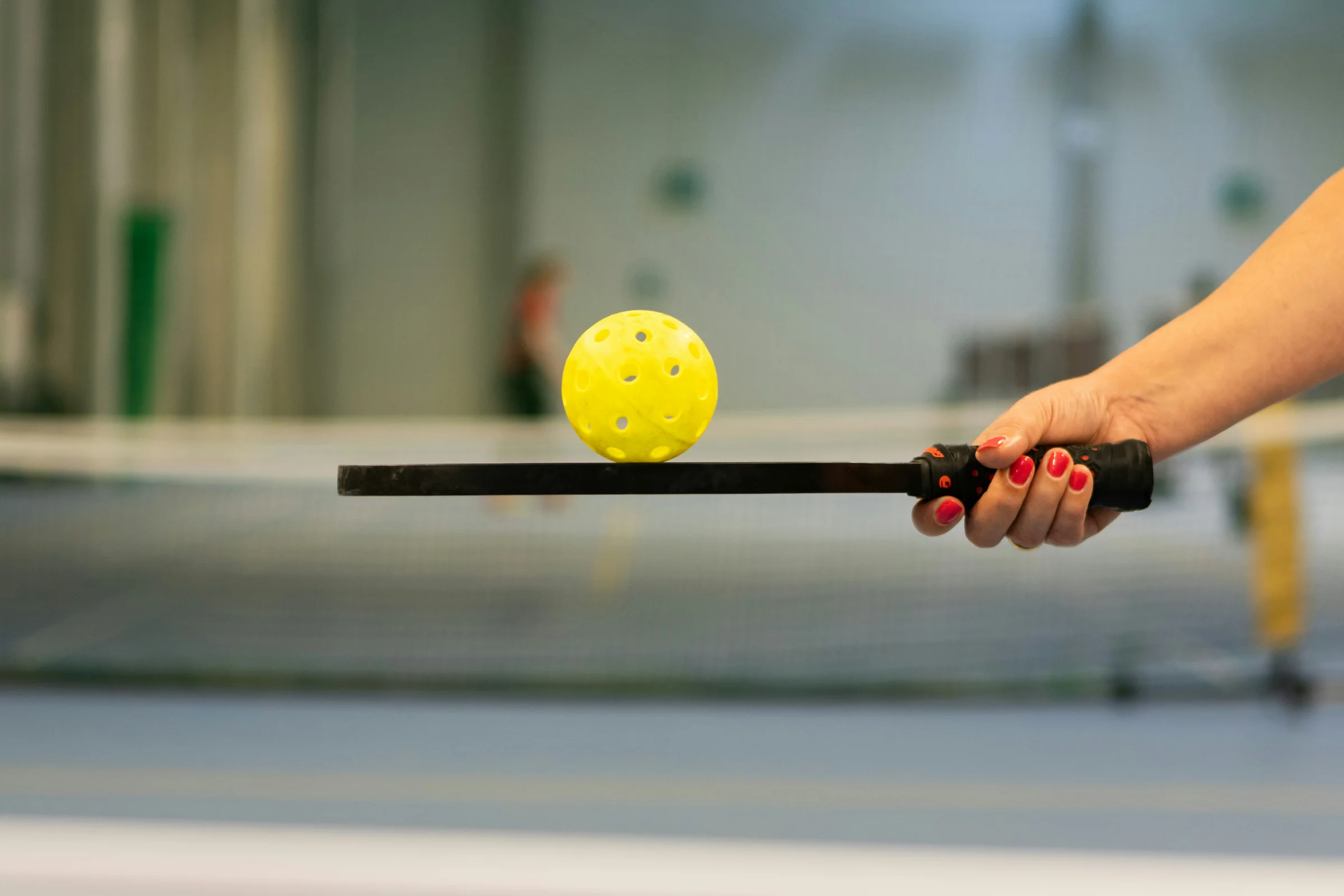
Spend five minutes shopping for a pickleball paddle and you'll hit a wall of materials jargon. Raw carbon. T700. Fibreglass. Composite. Thermoformed. Foam-injected. Each one is supposedly the secret to more power, more spin and more control, all at once.
This guide cuts through it. We'll explain how a paddle is built, what carbon fibre and fibreglass faces actually do differently, and how to decide which suits your game. Spoiler: carbon fibre has become the standard for good reason, but fibreglass still has a place.
How a pickleball paddle is built
Almost every modern paddle is a sandwich:
- Two faces (or "skins") — the hitting surfaces, usually carbon fibre, fibreglass or a blend.
- A core — a honeycomb of polymer (usually polypropylene) that sits between the faces. It's typically 13mm to 16mm thick.
- An edge — either an edge guard (a protective strip around the perimeter) or an "edgeless" finish.
- A handle — built up from the core and wrapped with a cushioned grip.
The face material and the core thickness do most of the work in deciding how a paddle feels. The face is what the ball touches, so it controls how the ball leaves the paddle: how fast, how much it grips, and how consistent that is across the face.
What is a fibreglass paddle?
Fibreglass (also called glass fibre or composite) is made of woven strands of glass set in resin. As a paddle face, it's relatively flexible. When the ball hits it, the face flexes slightly and springs back, which gives the ball extra speed. Players describe that as pop.
What fibreglass does well:
- Easy power, especially on drives and serves
- A lively, springy feel some players love
- Usually cheaper to produce
Where it falls short:
- Less precise — that extra flex makes soft shots harder to control
- Less consistent across the face
- Smooth fibreglass faces don't grip the ball as well, so many rely on painted or gritty coatings for spin, which can wear off
What is a carbon fibre paddle?
Carbon fibre is made from extremely thin strands of carbon woven into a fabric and set in resin. It's much stiffer than fibreglass for its weight. As a paddle face, that stiffness means the face deforms less on impact, so the ball comes off more predictably.
What carbon fibre does well:
- Control. The ball goes where you aim it, especially on dinks, drops and resets.
- Consistency. The response is more even across the face, so mishits are less punishing.
- Feel. You get clearer feedback about where you struck the ball.
- Spin, particularly with a raw face (more on that below).
Where it falls short:
- Less natural "pop" than fibreglass (though construction methods now claw much of that back)
- Typically a little more expensive
What does "raw carbon" mean?
A raw carbon face is left unpainted, so the natural texture of the carbon weave is the hitting surface. That texture grips the ball and helps generate spin. Because the texture is the material itself rather than a coating, it wears much more slowly than painted grit. It will gradually smooth over many months of heavy play — every paddle does — but it doesn't fall off in a few weeks.
What does "T700" mean?
T700 is a grade of carbon fibre defined by its tensile strength (how much pulling force it can take before breaking). You'll also see T300 and others. T700 is a high-strength grade that has become the common choice for quality raw-carbon paddles, because it gives a stiff, durable face without adding weight. It's not magic, but it's a good sign that a paddle maker hasn't cut corners on the face.
Carbon fibre vs fibreglass at a glance
| Carbon fibre | Fibreglass | |
|---|---|---|
| Feel | Crisp, solid, precise | Springy, lively |
| Power | Moderate — boosted by modern construction | Naturally higher "pop" |
| Control | Excellent | Good, but less precise |
| Spin | Excellent with a raw face | Depends on coatings |
| Consistency across the face | High | Moderate |
| Surface durability | Raw texture lasts well | Coatings can wear smooth |
| Price | Usually higher | Usually lower |
What about "hybrid" or composite faces?
Some paddles blend carbon and fibreglass layers to get some of fibreglass's pop with some of carbon's control. These can be excellent, but "composite" is also a catch-all marketing word, so check what the face actually is. If the brand won't tell you, that tells you something.
Does the face matter more than the core?
They work together. A thick 16mm core absorbs energy for a softer, more controlled feel and a bigger sweet spot. A thinner 13–14mm core returns more energy for more power but less control.
A carbon face with a 16mm core is the classic control combination: it's why so many players, from beginners to strong club players, gravitate to it. A fibreglass face on a thin core is the classic power combination — fun, but harder to tame.
The other buzzwords, explained
Thermoformed
In a thermoformed (or "unibody") paddle, the faces and edges are heat-moulded together around the core as one piece, rather than glued on separately. It makes the paddle stronger, especially through the throat, and generally adds power and a solid, quiet feel.
Foam-injected edges
Some paddles inject foam into the perimeter. That adds weight at the edges, which stabilises the face on off-centre hits (less twisting) and makes the sweet spot feel bigger.
Edge guard vs edgeless
An edge guard protects the paddle from scuffs and knocks — useful on the concrete and acrylic courts most Australians play on. Edgeless paddles look sleek and have a slightly bigger usable face, but they're more vulnerable to chips.
How to tell what you're actually buying
Paddle descriptions can be vague, so it pays to ask a few direct questions before you buy:
- What is the face made of? "Carbon" can mean a raw carbon face, a thin carbon layer over fibreglass, or a painted composite. A good brand will tell you exactly.
- Is the face raw or coated? Raw texture lasts; painted grit wears.
- How thick is the core? If it isn't listed, ask. It's one of the biggest factors in feel.
- How is it built? Thermoformed and foam-injected paddles behave differently from traditional glued constructions.
- What happens if it fails? Look for a clear warranty and a local returns policy. Faces can delaminate and cores can break down; you want to know the seller will stand behind the paddle.
Does face material affect durability?
Yes, in two ways. First, surface texture: raw carbon keeps its grip longer than painted or gritted faces, which is where most players first notice a paddle "going off". Second, structural durability, which depends far more on build quality and how the paddle is treated than on the face material alone. Heat is the biggest enemy of any paddle, carbon or fibreglass — see our guide to looking after your paddle in the heat.
So which should you choose?
Here's how we'd think about it:
- You're new, or want more control: carbon fibre with a 16mm core. It's forgiving and helps you learn the soft game that wins points.
- You're an ex-tennis or squash player who likes to hit hard: carbon fibre still, but consider a thermoformed build for extra drive. You'll be surprised how much a controlled paddle helps once you learn the third-shot drop.
- You want maximum pop and you're happy to trade control for it: fibreglass, or a hybrid.
- You're on a tight budget for a first hit: a basic fibreglass paddle is fine to start, then upgrade once you're hooked.
The bottom line
Carbon fibre isn't a gimmick. Its stiffness gives you control and consistency, and a raw carbon face gives you spin that lasts. Fibreglass still delivers fun, easy power, and it has a place for some players. But for most people buying a quality paddle today — especially your first proper one — carbon fibre is the better bet.
Still weighing up the other specs? Read how to choose a pickleball paddle for weight, grip size and shape, or let our Paddle Guide quiz do the thinking for you.